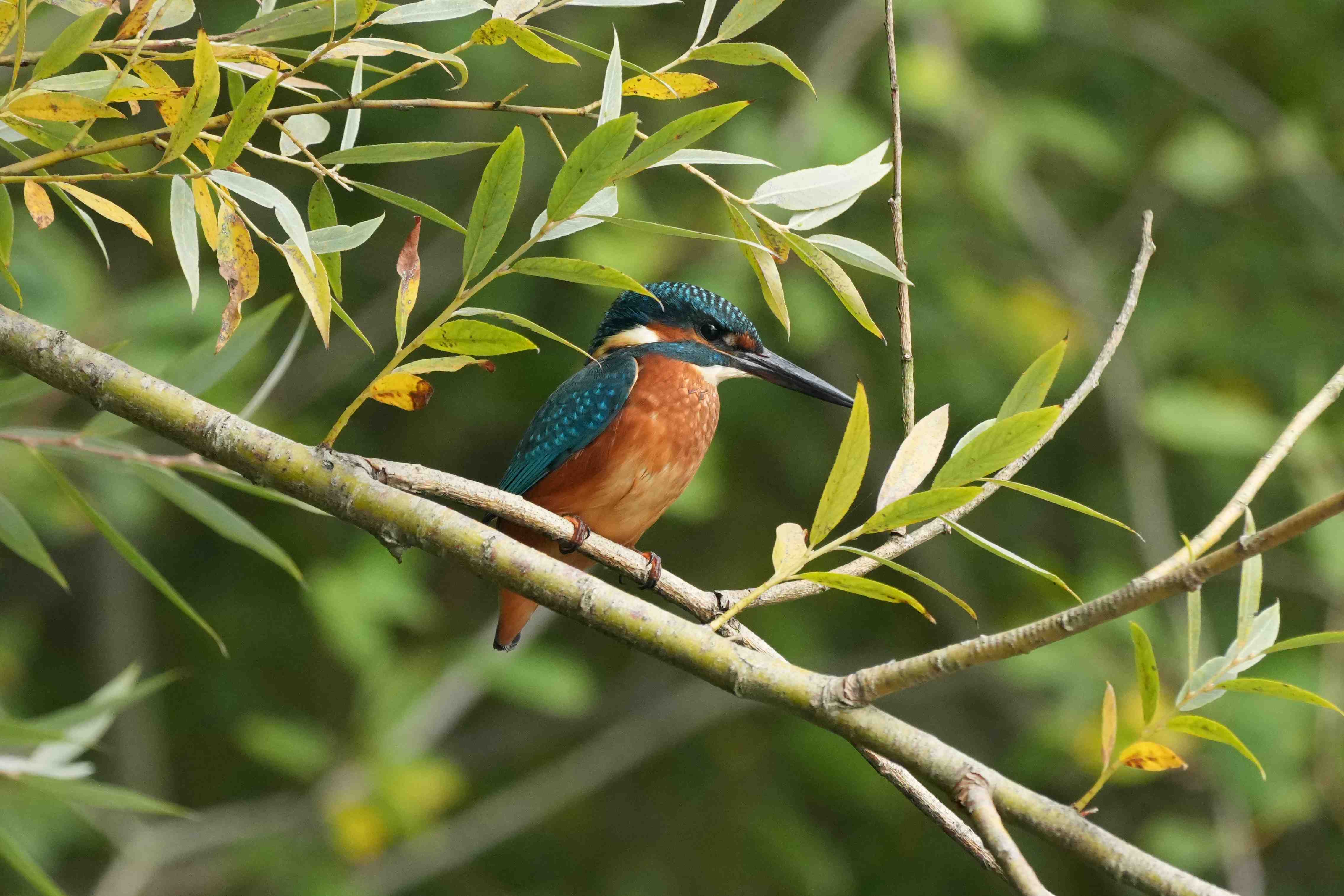
These bolts of blue along the riverbank are a stark contrast to our many brown or otherwise camouflaged birds in the UK. We are home to just one species, the Common Kingfisher, but there is a huge variety of these brightly coloured beauties across the rest of the world.
This is a male Kingfisher, pictured at Warnham Nature Reserve, as he perches looking for fish in the clear water of the mill pond. You can tell the sex as he has a fully black beak, whilst the female wears red lipstick on the underside of her beak.
Their dive from a perch is spectacular, but so is their physiology. When underwater they can still see through a specially adapted transparent eyelid and they are able to hover in place with extremely fast wingbeats whilst they wait for the perfect opportunity to snatch a fish with their dagger-like beak.
Kingfishers
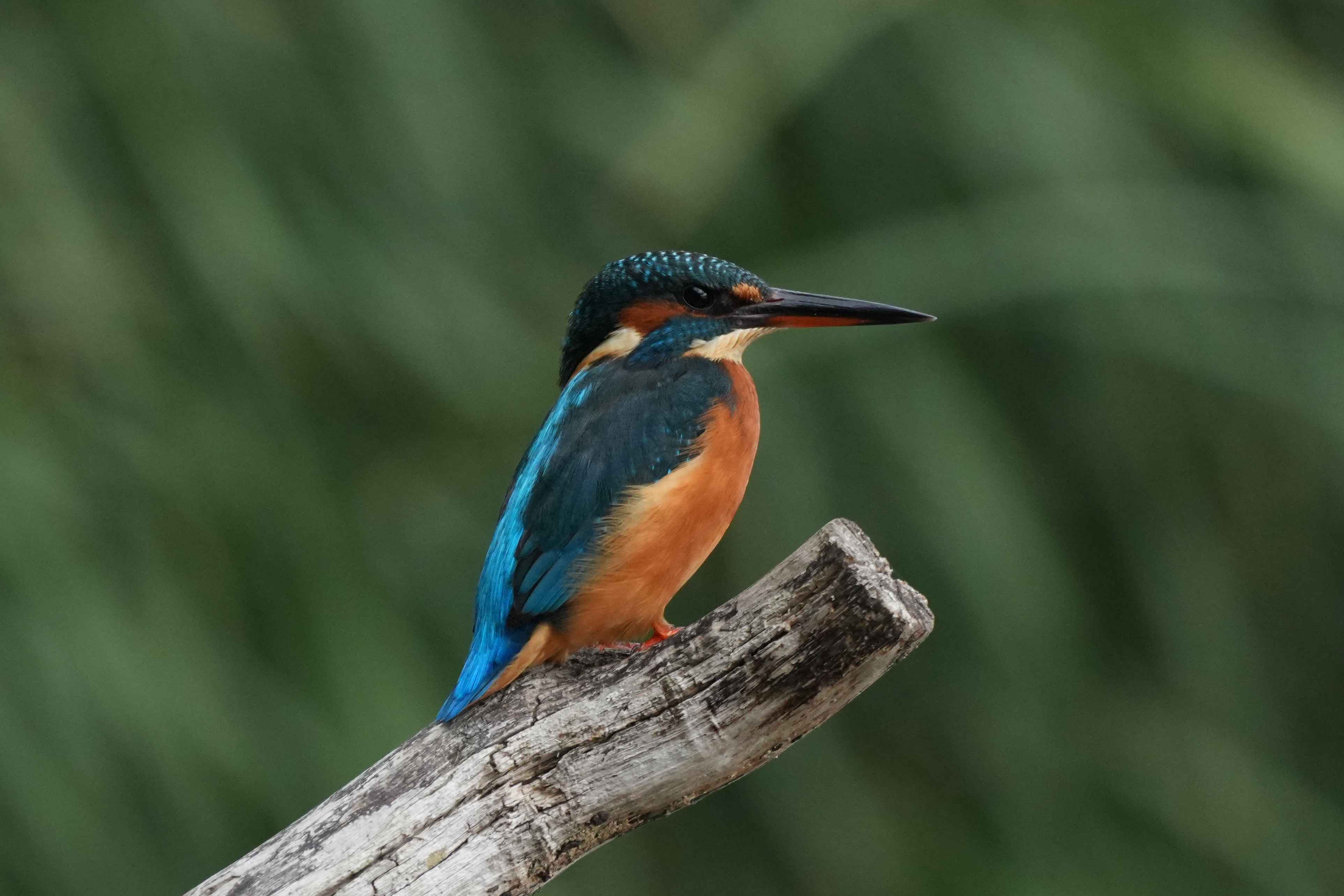
Kingfishers like this female, are mainly found on inland waterways in the UK. Including rivers, lakes and even occasionally garden ponds. They can be quite elusive and require a lot of patience because they are highly sensitive to disturbance.
They are also highly sensitive to pollution disrupting their requirement for clear water and killing off their preferred fish diet. The threat to their survival alone is a good enough reason to campaign for and support the cleaning up of our rivers and inland waterways. Without these beautiful blue creatures, our land would be far more dull.
Another interesting fact is that their feathers aren't actually blue! Much like polar bear fur not being white, the colour comes from the way their feathers scatter the light. In very detailed videos you can even see as their feathers blow about, their actual brownish feathers.