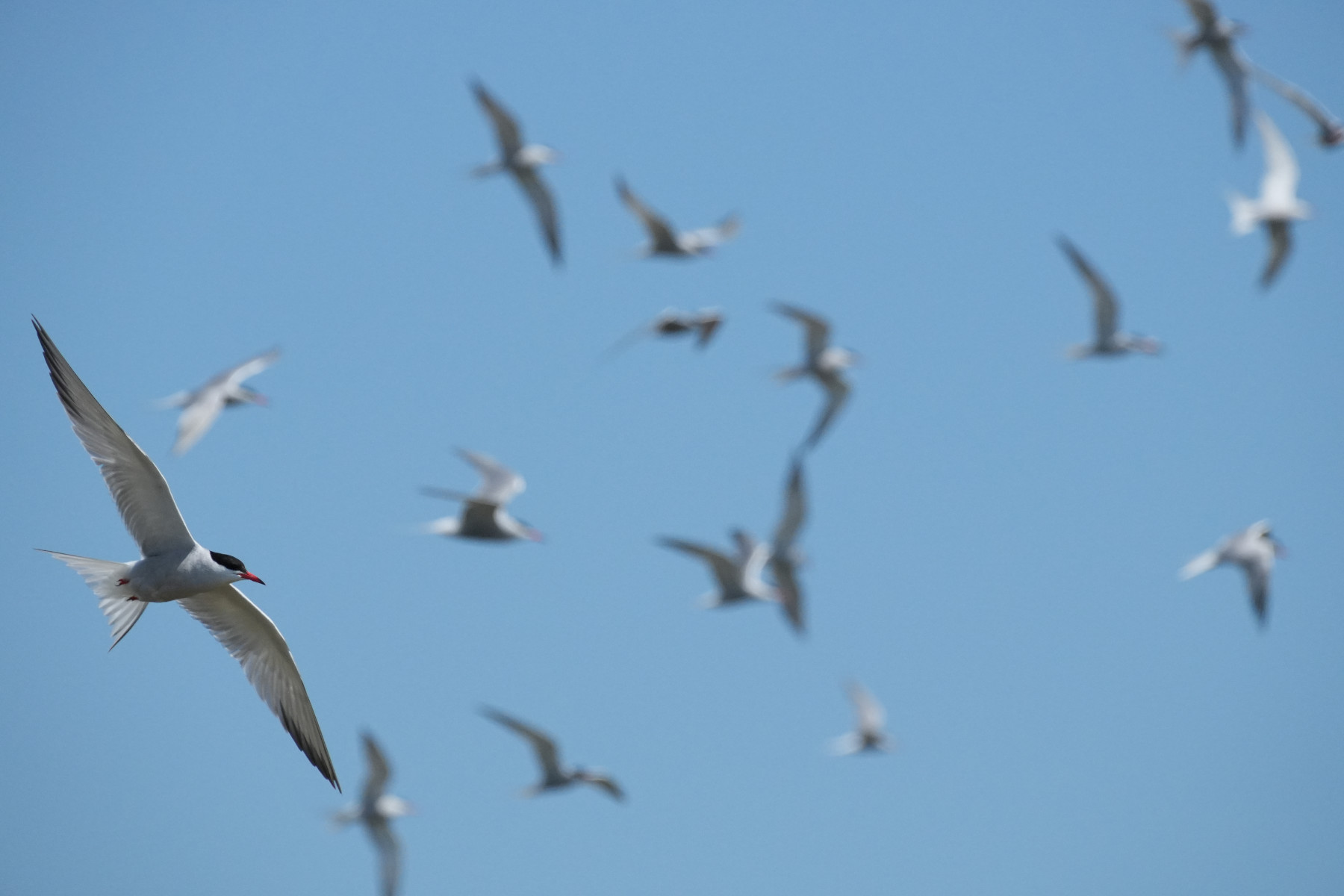
These seabirds make up the Laridae family. Gulls are well known to all (even if there is no single seagull), but terns are less present in our lives. They often require far more secluded shingle to reproduce.
It is a diverse family including the bird with the longest migration each year the Arctic Tern, the city dwelling Herring Gull and the purely maritime Kittiwake.
Here a Common Tern is pictured at Rye Harbour Nature Reserve. Several species of tern nest on the shingle of the islands at the reserve including Common, Sandwich and Little Terns.
Terns and Gulls
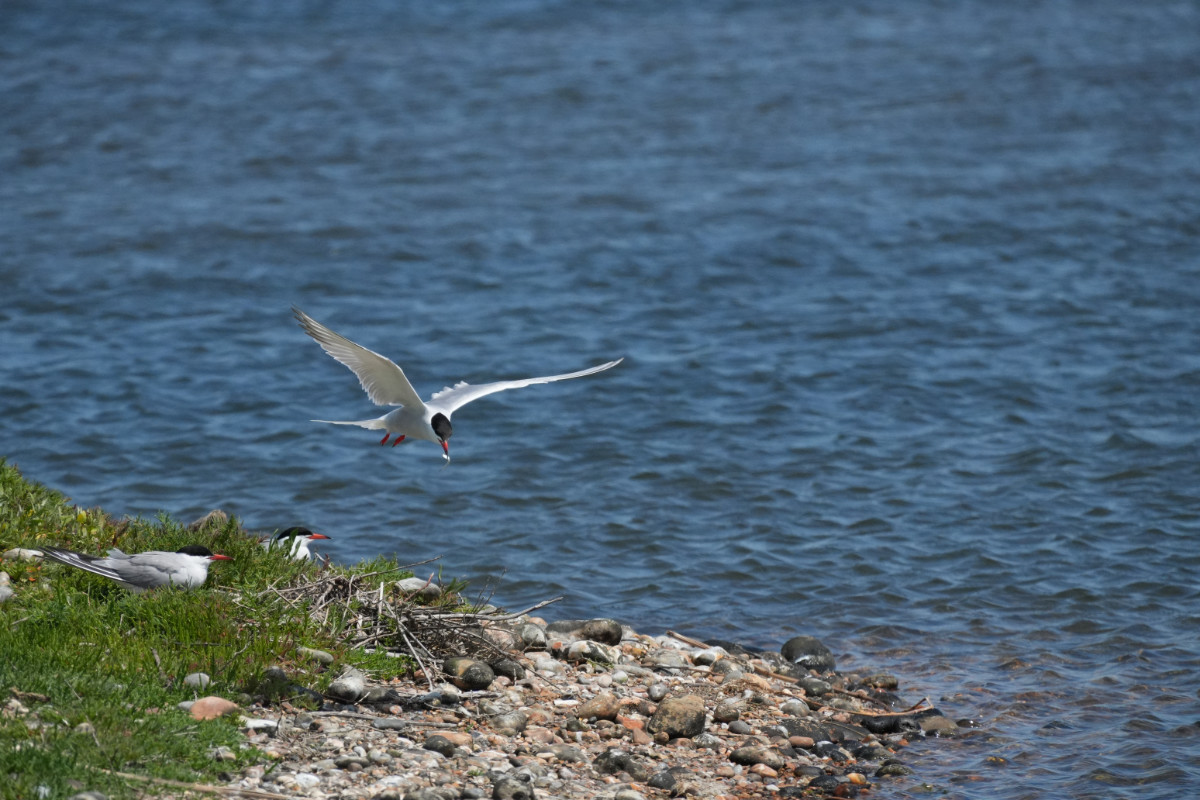
Common Terns nest on the ground to breed in the UK over summer. Some prefer inland waterways, including ponds, lakes and rivers on gravel whilst others, including these pictured here at Rye Harbour, prefer estuarine and coastal shingle.
Their adaptability makes them less susceptible to the habitat loss that has so degraded numbers of Little and Arctic Terns. But, numbers of Common Terns are still declining. Efforts to protect the species include building artificial raft-based nesting sites and selectively culling of chick predating Gulls which were both successful in improving survival rates.
A Tern community is extremely impressive. They are incredibly loud and doggedly mob predators as a group. They also take turns fishing for sprats, whiting and sandeels for their nest-sitting mate, such as in this image which makes up the bulk of their diet. Although they are known to eat crustaceans, worms and insects as well.
Terns and Gulls
Some Tern species can be hard to tell apart. The Arctic and Common Terns have black hats on, red feet and a red beak. You can just about tell by the whiter wings and longer tail of the Arctic species, but at a glance it's difficult.
The Roseatte Tern is uncommon but also looks similar with a slight pinkish breast. Little Terns are a bit easier to tell apart with a yellow bill and white patches in its black cap.
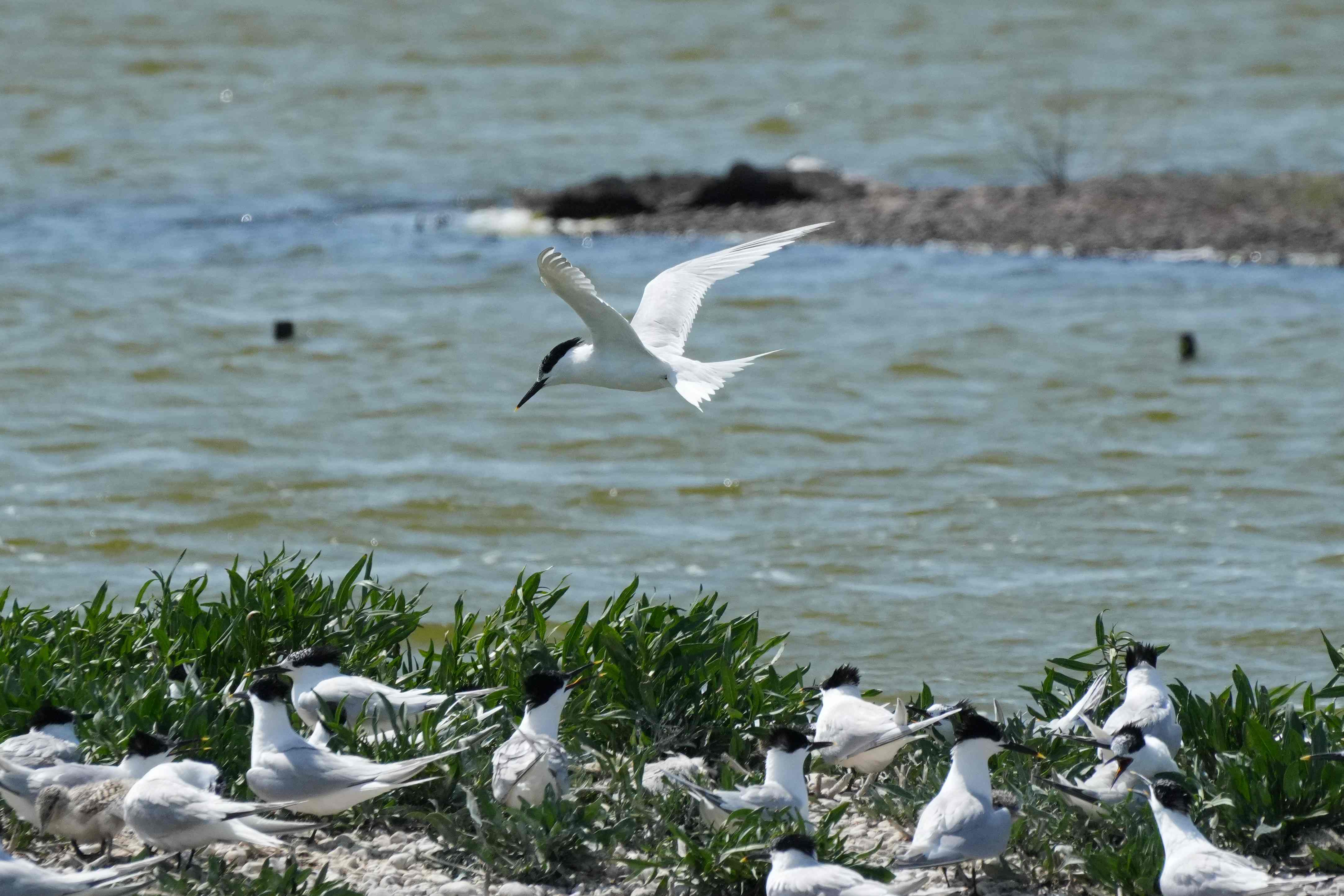
But the Sandwich Tern (pictured here) is very distinctive. Although it maintains the sleek and sharp physique of the Terns, it is the emo of the Tern world. Its bill, feet and cap are all black and it can spike up the feathers around the back of the cap particularly when courting.