Broadleaf Trees
Is there a more transformative group of life than trees? They have so drastically changed our world as to make it liveable for large animals changing the climate and providing food and shelter for so many.
They can even calm us, releasing chemical compounds that regulate our nervous system. I cannot think of many more calming experiences than sitting in the sun dappled shade of a beech woodland or foraging for sweet chestnuts in the autumn.
Many broadleaf trees are recognisable by their distinctive leaves. The Oak is the logo of the Woodland and National Trusts, the Ash has its complex thin leaflets and the Hawthorn's lobed leaves go great in a great spring salad.
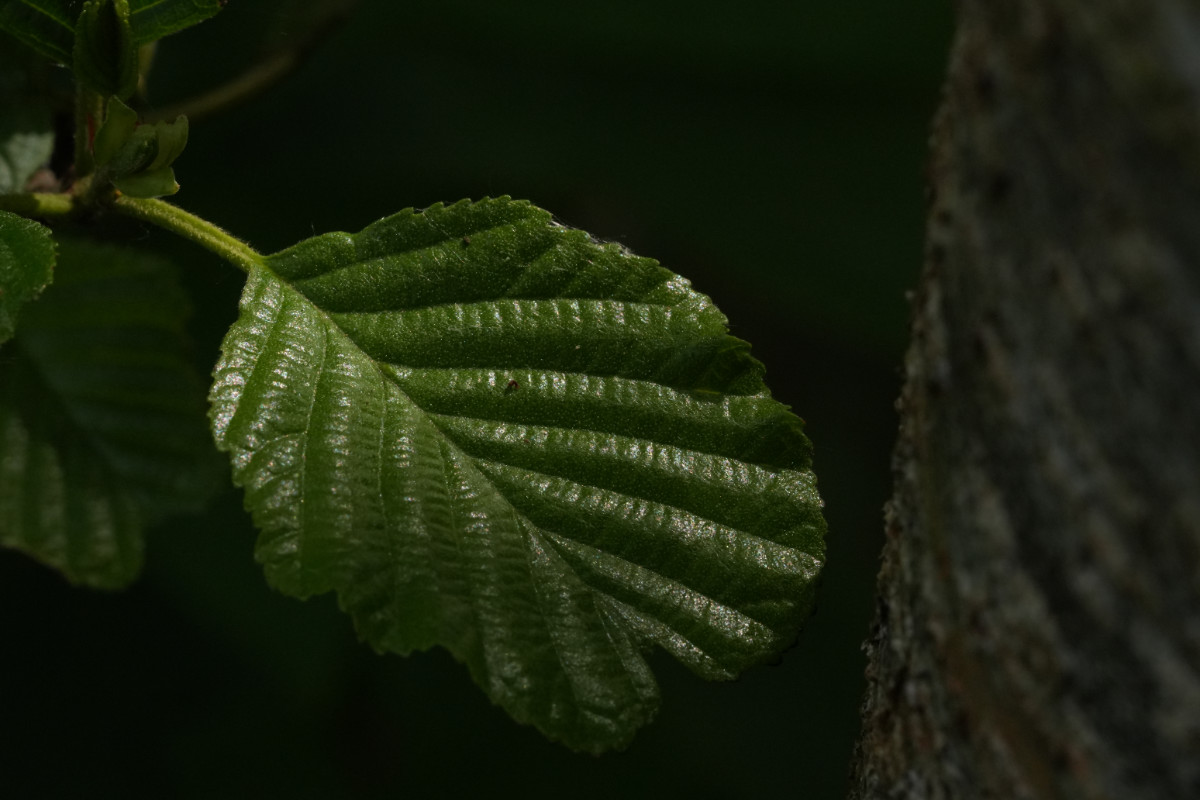
Pictured is a Common Alder leaf from Fishlake Meadows Nature Reserve near the River Test. It is slightly less in the public consciousness, but it is recognisable from it's round and serrated leaves and prominent parallel veins.
Broadleaf Trees
The UK is now home to many species of maple, like the stunning Acer Japonicum and the now common Sycamore. It was not always this way though, most have been introduced, with the Field Maple being the only acer native to the UK.
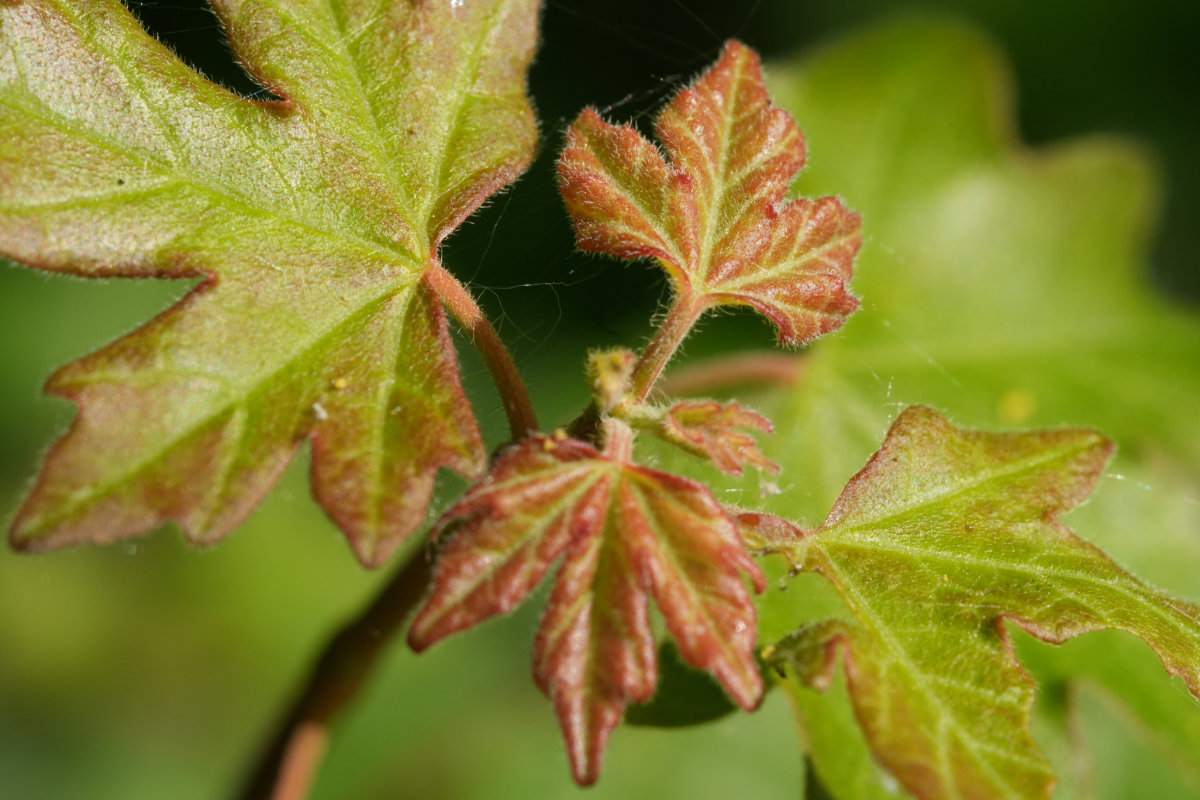
This picture was taken in May with fresh leaves growing on a young field maple in a bushy area of Woods Mill Nature Reserve. It's an important food source for moths and aphids, and as such particularly loved by their predators including birds and ladybirds.
You might think of Maple Syrup as a distinctly Canadian product, and it is most commonly produced from the Sugar Maple. However, it can be produced from the Field Maple, especially in colder climates where more starch is stored in the trunk and roots before rising in the spring.
Broadleaf Trees
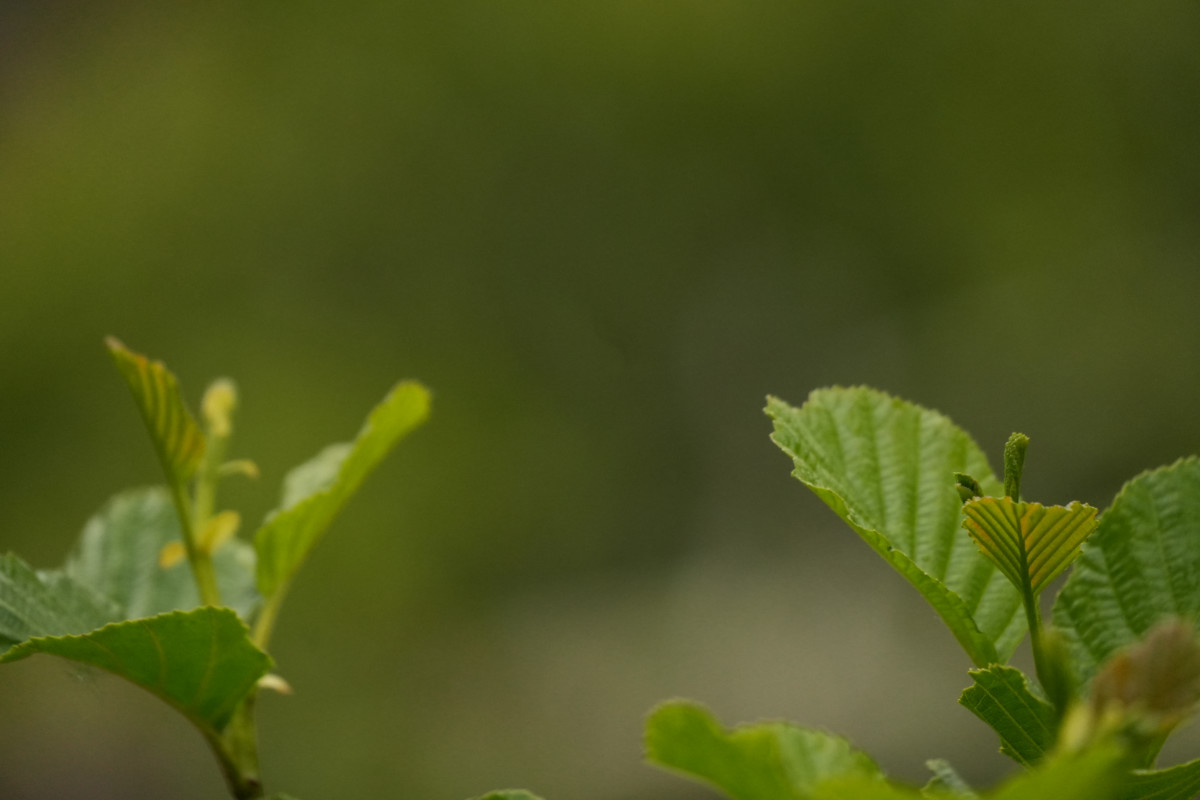
Here we have another view of the Common Alder, this time opening it's fresh green leaves in spring. You can generally find them on the edge of waterways because they love moist ground. Their bark and roots will not rot like other less water happy trees. They support a host of wildlife and make great nesting sites for other water loving species like the otter.
They also appear as different to other trees in their reproductive structures. Like other angiosperms they produce flowers and like many other trees these are on their catkins. As a monoecious plant both male and female catkins appear on the same tree. The male are longer and thinner and the female are more rounded.
The female catkins are at first red, then green and then after pollination they eventually turn brown. The process of turning brown and hardening is what sets them apart. They are described as cone-like because they resemble the structure of pine cones, but are still fruits as opposed to cones. When ready, they open up and release their seeds to be dispersed by either the waterways they inhabit or by wind.
Broadleaf Trees
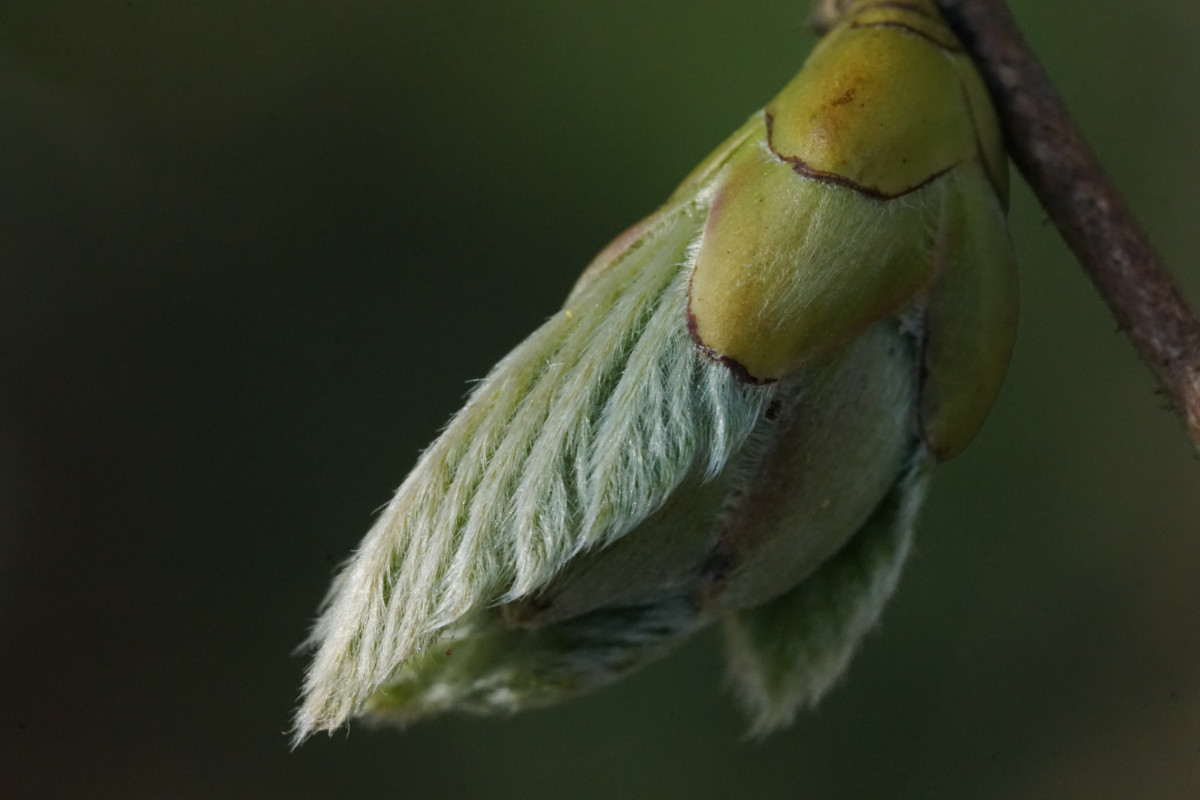
Spring is one of my favourite times of the year. Buds like these of the Common Hazel begin to burst. You can see the bud casing on the right opening to reveal the fuzzy fresh leaves which are arranged alternately along the stem.
The leaves can be confused with the English Elm, but on closer inspection you find that the Hazel leaf has a symmetric leaf base as opposed to the asymmetric base of the Elm. It is also a monoecious plant like the Alder, but the catkins are very different with the Hazel having long clusters for the male and tiny red bud-like flowers for the female.
They have been used extensively, particularly for their nuts and wood. The nuts are surrounded by modified leaves (bracts) that look like ruffs. Pre-historic societies were known to cultivate them in great quantities and we make delicious chocolate treats with them today. They have also been coppiced traditionally for the poles used in wattle-and-daub.
Broadleaf Trees
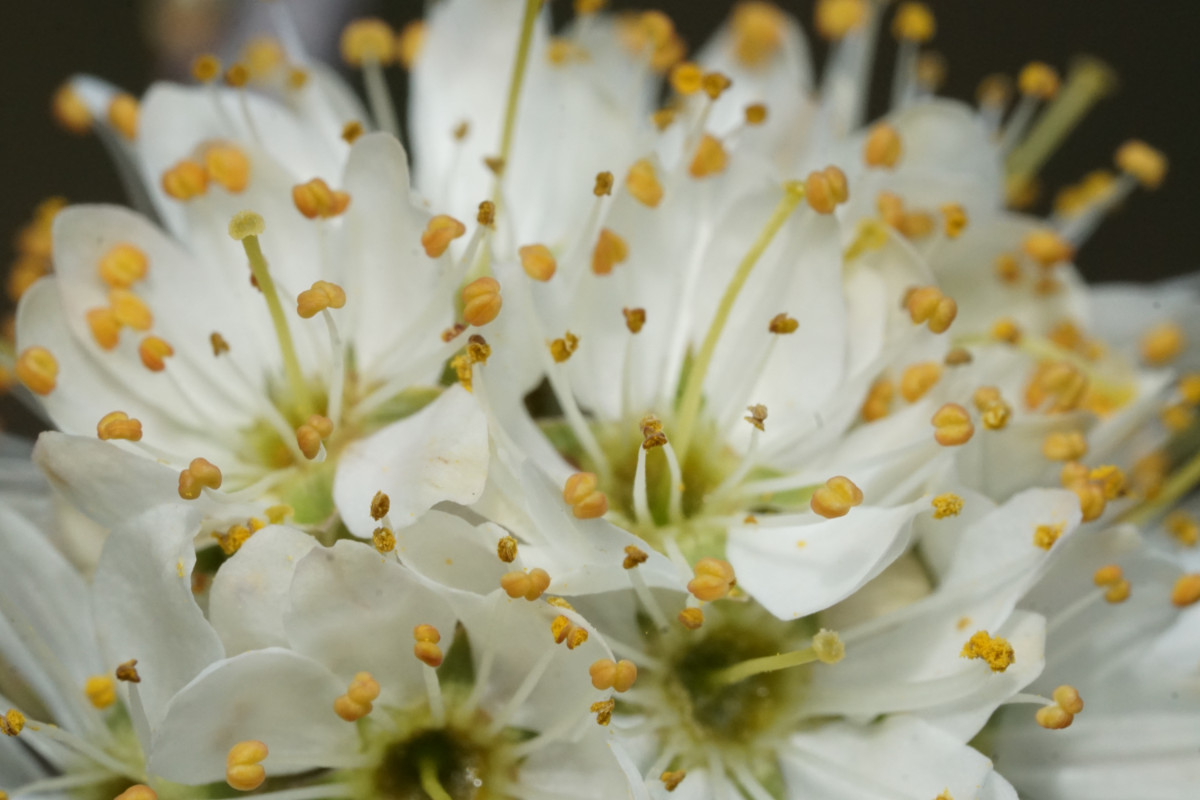
It is not only the leaf burst that is so enjoyable in spring. There is also an explosion of white flowers in our hedgerows. Some of these are from the Blackthorn which flowers before it produces leaves, others are from Cherries and Apples but most commonly they are from the Common Hawthorn.
The Hawthorn is a member of the Rose family. Which might surprise you, because trees are in fact not a family and have actually evolved independently. Which is a good example of convergent evolution, which has led to many families adopting woody stems to grow taller to compete for sunlight.
It often grows as a shrub in hedgerows and can form dense thickets. Espoused by Christopher Hart in the book Hedge Lands as important habitat. It is a key habitat for many birds and small mammals as well as providing a rich source of early nectar for insects such as midges and bees. The berry-like haws, though eaten by wildlife, are not of much use to us. The leaves however are a great addition to salad when picked early in the season being called bread and cheese.
Broadleaf Trees
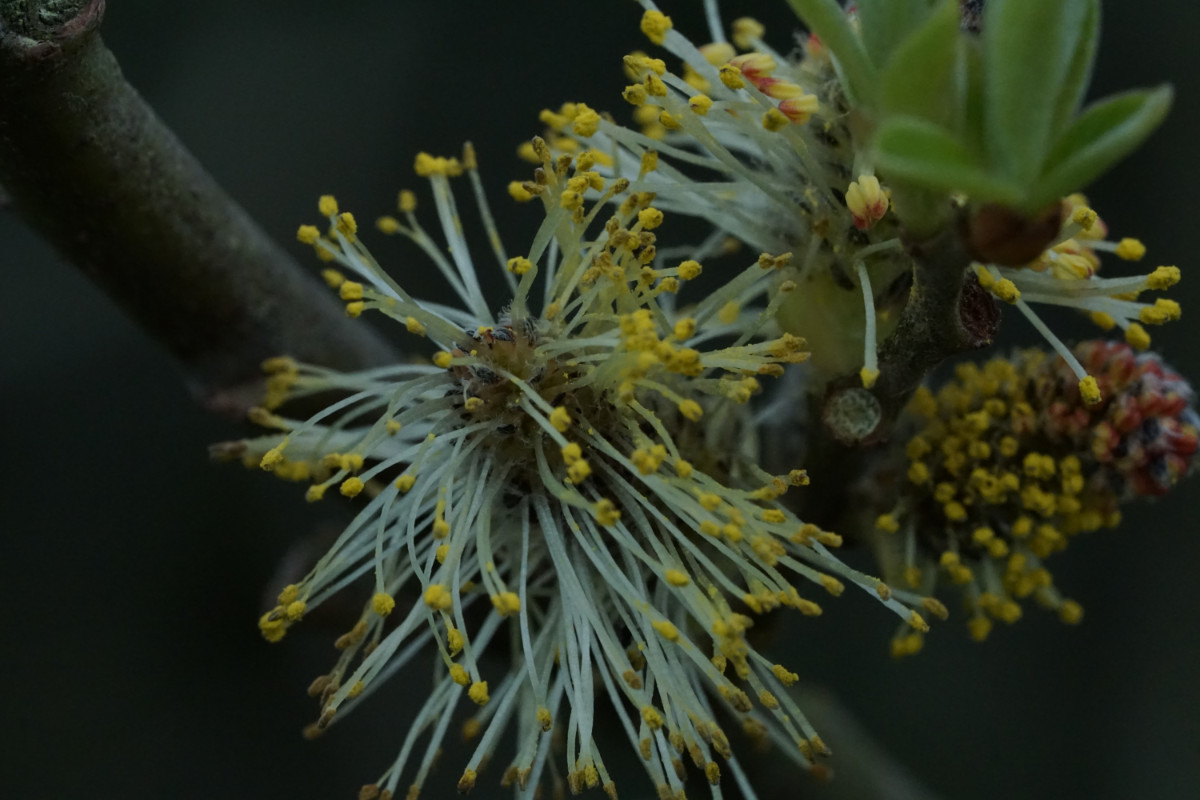
This is the flower of a Willow tree. I did not record the exact species, but it is a male catkin with bright yellow anthers covered in pollen atop a long pale stamen. It bloomed in the early spring at Wakehurst place on a cold crisp day.
Like the Alder, the Willow is a water loving tree. The Weeping Willow is truly one of the most beautiful trees when it droops over a pond or river in spring and summer. It is not a native species to the UK, but if you ever get the chance to paddle along the Stour near Canterbury, these trees will make it a magical experience.
It is also a medicinal plant. There are records of people chewing on it for pain relief in ancient times. I can't speak to the efficacy of that method, and have heard it can have nasty digestive issues, but they might have gotten something right. It contains salicin. Modern chemists have synthesized it into acetylsalicylic acid, known to us as aspirin.